


Read in

Table of contents
Posted on 11/03/2026
Hi.
The situation in Iran is evolving rapidly - and it's already affecting the freight market across all three modes of transport: road, sea and air.
We've gathered the essentials here so you can quickly get an overview and take action if necessary.
The situation in brief
What we're seeing right now is not just a localised geopolitical event. It's evolving into a broader freight cost event that is affecting the entire
the global transport chain.
The Strait of Hormuz is severely disrupted. Airspace over much of the Middle East is closed or restricted. And diesel prices are going up (and down) - with direct consequences for European road transport.
Let's go through the three modes of transport one by one
Sea freight - the hardest hit mode of transport
Sea freight is the mode of transport that is most directly exposed. The Strait of Hormuz, which normally handles a huge share of the world's shipping traffic, is close to a complete standstill.
The consequences are already visible:
- Approximately 12% of the global container fleet is directly affected by the situation in the Middle East
- Over 150 container ships trapped in the Persian Gulf
War risk surcharge: $2,000-4,000 per container - Maersk issued a temporary Emergency Bunker Surcharge on 10 March. MSC has done the same.
- Routes rerouted via Cape of Good Hope - longer sailing time, higher fuel costs
What you can expect:
Higher spot rates, more surcharges from shipping companies, and greater uncertainty about transit times. Keep an eye out for communication from your shipping companies/forwarders on an ongoing basis.
Air freight - significant drop in capacity
The conflict has shut down large parts of the airspace over the UAE, Qatar, Iran, Iraq, Kuwait and Bahrain. This hits air freight hard.
- Global air freight capacity is reduced by 24%
- Asia-Europe corridor is down 35-40% in capacity
- Over 25% of all air freight between China and Europe usually passes through the Middle East - this route is in serious crisis
Shipments - from ferry goods to aircraft spare parts - are stranded. Emirates has resumed limited flights, but the picture is unstable.
What you can expect:
Fewer routing options, higher rates and less predictable capacity.
Road transport - diesel price is the main driver
Outside the conflict area itself, road transport is not directly affected by closed corridors - but the diesel market is.
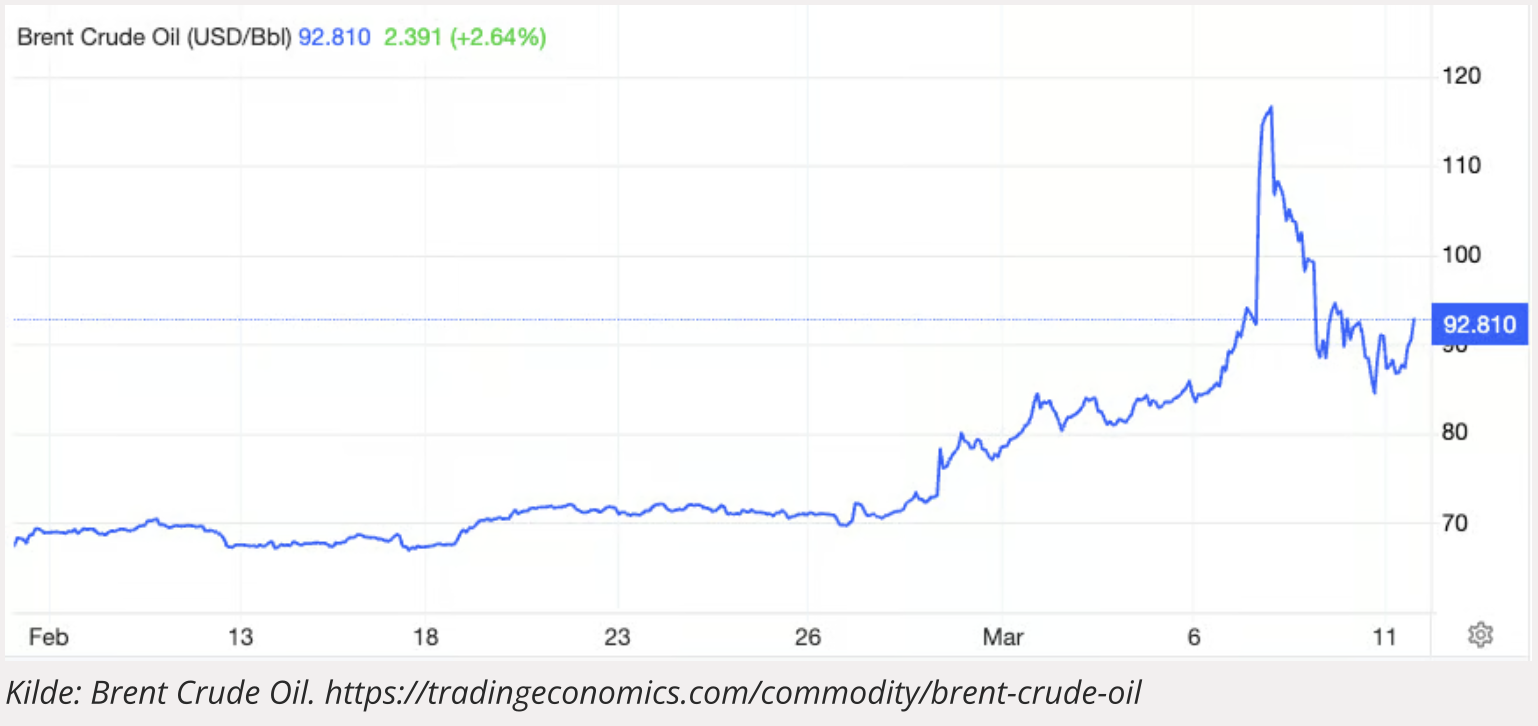
- Brent crude rose from $75/barrel (2 March) to $115/barrel (9 March)
- Expert forecasts point to possible levels up to $120-150+ per barrel in an escalated scenario
- We already see at FreightSolution that most carriers have started sending information about fuel changes. We've seen anything from a few per cent up to +10% in fuel surcharges from the different operators.
- Note that often as a general rule, freight forwarders calculate the oil surcharge as 20% or 33% of the total price if you have all in instalments.
The surcharge varies from carrier to carrier - and that means your current quotes can quickly look different to what you'll actually pay.
Our recommendations for you
1. Keep your offers up to date
The market moves fast. Quotes you obtained 2-4 weeks ago may not reflect current levels. Check if your rates are still valid - especially for sea freight and air freight.
2. Follow up on fuel surcharges on road transport
Has your carrier sent out information about changes to the fuel surcharge? And is it clear what this means for your freight costs? Ask about it if you haven't already been notified.
3. Be aware of surcharges that are added on top of surcharges
As we've previously shown, some carriers calculate fuel surcharges on other surcharges as well - this can mean that the real cost increase is greater than it appears at first glance.
4. Consider alternative routing on air freight
If you're shipping time-sensitive goods by air, talk to your freight forwarder about alternative routes and possibly sea-air combinations before capacity disappears further.
5. Monitor the situation continuously
The situation is changing day by day. We recommend that you follow communication from your carriers and freight forwarders closely - and be ready to react quickly if there is further escalation.
That was a quick update on the situation as we know it today, 11 March 2026.
We'll keep an eye on developments and send updates as we learn more. Let us know if you have any questions or need support - we're here for you

Sincerely yours
André Lundberg
CEO & Co-Founder